Subway and their Digital Initiatives

When thinking about digital business models and companies that have benefitted greatly from them, fast food chains would more than likely not be the first type or organisation which comes to mind. While outsiders may see little opportunity for a sandwich franchise to adopt and implement technological innovations, Subway is ahead of the curve. Speed and convenience have long been major factors in why consumers are drawn to quick service restaurants. Customers expect the fast and efficient service that barely requires them to look up from their smartphones, and fast food chains must innovate accordingly (PYMNTS, 2018). There are three primary ways in which Subway looks to use technology to retain as well attract new ones, which are focused around loyalty, kiosks, and mobile.

Much of the technological change seen in Subway came with the arrival of the current chief digital officer Carissa Ganelli at Subway back in October 2017. One of her first initiatives was the MyWay loyalty programme. When asked, she stated that the programmes objective was quite simple: “I want to make it as easy as possible for our customers to get our food” (Kelso 2018). Having a solid, functioning and reliable loyalty programme is critical in the intensely competitive fast food space. According to Ganelli, they MyWay loyalty programme has seen 10 times the number of enrolments compared to the old loyalty programme with zero advertising. She attributes this success to the 3 key elements in MyWay. Firstly, customer can earn a cash value reward, where they earn $2 for every $50 spent. Second, there is a is something called a frequency reward, where customers receive “surprise and delight” rewards if they are frequent customers. Lastly, subway will actively encourage and remind members to cash in on their available rewards. MyWay also comes with features that are online or mobile only (Kelso 2018, and PYMNTS 2018).

Retrieved from: https://thumbor.forbes.com/thumbor/960×0/https%3A%2F%2Fblogs-images.forbes.com%2Faliciakelso%2Ffiles%2F2018%2F11%2Fkiosk.jpg

Another technological implementation is the use of kiosks in their stores. Something which has been in Mcdonalds stores, for example, for quite some time was beginning to be placed in Subway stores. The idea behind this is that whilst the immersive mobile app and online customer experience are there to sate the customers need for speed, the kiosks were to upgrade the look, feel and experience of physical Subway stores (PYMNTS, 2018). Ganelli also states that they have noticed that consumers will walk into their restaurants and go straight towards the kiosk and not interact with any staff members. A strange finding from looking at their order tickets was that customers who used the kiosks spent more on average than those that didn’t, purchasing more of the add-ons and “make it a deal” options. Overall though, the kiosks primary function was to satisfy the customers expectations of fast service and speed up the ordering of sandwiches (Haverans, n.d)

Arguably the biggest impact with regards to the digital side of Subway is their delivery options. In 2018, subway launched ordering on Facebook messenger, two years after they delved into remote ordering capabilities. Perhaps the only way to make things even more convenient and efficient for customers than fast food already is, was to have the food brought directly to them. Ganelli told Forbes that mobile ordering had experienced 100% year-over-year growth. Not only can people enter their orders through their mobile app to collect in store, but it also provides the option of having the food delivered. In order to expand their reach even further, Subway partnered up with other third-party applications, namely 4 major delivery services in the United States: Uber Eats, Postmates, GrubHub, and DoorDash. In the United Kingdom, they also have their food delivered by Just-eat. Subways senior director of Global Convenience said that “by partnering with the four largest delivery providers, we are able to leverage their expansive geographic networks to deliver customized meals to our guests wherever and whenever they want them. we have also seen that each of the providers attracts a different – and loyal – consumer following.” (Kelso, 2018)

Retrieved from: https://www.businessofapps.com/wp-content/uploads/2016/02/iStock_000076538407_Large.jpg

Subway was somewhat behind and slow to innovate in comparison to their competitors, but they have comeback and continue to look towards the future. Their focus and intentions are clear and intend to focus on what attracts customers to Subway and fast food in the first place: make ordering food as fast and easy as possible. Through their kiosks, apps, delivery services and loyalty plans, Subway has used their digital business model to increase their business in a tremendous way, after closing several stores and declining in 2016. These innovations have allowed the company to bounce back, and there appears to be no signs of slowing down as they employed over 150 technology, marketing and operational professionals to support the business’s mobile app, along with other technological initiatives further down the line (Alberto, 2018).

References:

Albert, C. (2018). Business success stories of digital transformation that will leave you thinking. Retrieved 3 March 2020, from https://www.itproportal.com/features/business-success-stories-of-digital-transformation-that-will-leave-you-thinking/

Haverans, R. Top 12 Real-World Digital Transformation Success Stories | My Brainbridge. Retrieved 3 March 2020, from https://www.brainbridge.be/news/top-12-real-world-digital-transformation-success-stories

Kelso, A. (2018). Subway’s Digital Initiatives Show The Chain Is No Longer ‘Slow To Innovate’. Retrieved 3 March 2020, from https://www.forbes.com/sites/aliciakelso/2018/11/13/subways-digital-initiatives-show-the-chain-is-no-longer-slow-to-innovate/#3d75df863526

Subway Seeks To Innovate, Reworking Kiosks, Loyalty And Mobile. (2018). Retrieved 3 March 2020, from https://www.pymnts.com/exclusive-series/qsr-and-mobile/2018/subway-restaurant-innovation-kiosks-loyalty/
Marketing in the Digital Economy

The emergence of a digital economy has affected many careers and industries, but perhaps none more so than marketing. Technology has transformed marketing by making more personalised and immersive campaigns, as well as creating ecosystems that are more integrated and targeted for marketers (Pinchbeck, 2019). The internet and other technologies have had a profound effect on the way businesses operate. This transformation has resulted in new business techniques that add customer value, build customer relationships, and increase a company’s profitability and their bottom line (Frost and Strauss, 2008).

Retrieved from: https://www.mockupworldhq.com/wp-content/uploads/2019/05/Free-Outdoor-Advertising-Billboard-Mockup.jpg

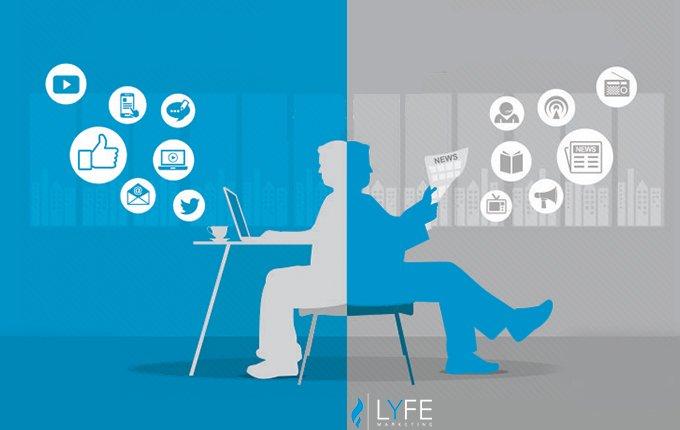
Marketing is the action or business of promoting and selling products or services. Traditionally, marketing departments and marketing executives would be tasked with developing a brands image around a product. This would involve market research and identifying consumers needs and preferences, then developing marketing and advertising campaigns to promote the product and increase sales. In the past, these promotions and advertisements were presented in physical formats such as magazines, newspapers, flyers, posters and large billboards. As technology developed, new avenues through which to promote products emerged, namely television and radio. In the present day however, both market research and the promoting of products or services, have changed drastically due to the digital/internet economy.

There are 3 big ways in which the internet and digital economy has affected marketing positions. Looking at the market research first, the digital space provides a new way to understand consumers wants and needs. Everything people do online tends to leave a digital footprint, and companies can monitor consumer interactions, likes, search histories, reviews and reactions similar products and advertisements for those products, etc. to identify their target demographics and what their marketing plan is going to be. Following market research, there is the use of the internet to promote the product or service.

Retrieved from: https://www.lyfemarketing.com/blog/digital-marketing-vs-traditional-marketing/

The internet makes it possible to have advertisements for a company’s product promoted directly to those same consumers through complex algorithms. There are also streaming platforms, social media advertisements, E-mail advertisements and subscriptions, and several other ways of promoting something to consumers on the internet. These changes in marketing strategies from what they might have been in the past are due to changes in consumer behaviour (Tiago and Verissimo, 2014). There are about 4 billion internet users online, meaning just over half the population is connected online. There are also roughly 5 billion people who have mobile devices and over half of these are smart phones. It is anticipated that $93 million will be spent on mobile advertising this year alone, which is 20 million more than will be spent on TV (Pinchbeck, 2019). The digital space also makes it possible to track the results of different advertisements, not only through sales numbers, but through interactions and reactions to them online. It is possible to monitor how many times people clicked on an advertisement, how many likes a particular add might have on social media or YouTube, comments people leave, how much traffic the company’s website has received since the release of a particular marketing campaign, etc. It provides a direct connection to consumers where they can provide their own feedback as well and in turn benefit the company further down the line.

The internet is also a place that provides accessibility to customers as more and more people are purchasing things online every year. Advertisements can drive traffic to the website and increase sales, as the items are but a click away from the consumer and they do not have to go out of their way to purchase anything. Marketing teams could also choose to provide online-only deals to customers that purchase from them rather than outlets or other stores selling their products, giving the business the money directly. This also provides the ability to promote products or services in different markets that the company would not have had access to previously, as well as provide smaller companies an opportunity to compete with larger ones (Chaffey and Chadwick, 2019). All of these new possibilities are becoming a larger and larger part of marketing efforts for businesses.

Retrieved from: http://ajwinteractive.com/services/e-commerce-shopping-cart/

With regards to the future of marketing teams and executives in this digital economy, I believe we will continue to see a shift towards a more digital marketing environment. As time goes on, the generations coming into these positions have grown up taking instant digital information for granted (Morris 2009). In the same way that I spoke about consumer behaviours shifting above, these are the same consumers who will be taking up these positions having grown up in a digital age, and as such will continue to push a more digital approach to marketing. It is also unlikely that marketing roles will be replaced by machines or algorithms. Although algorithms and technology will not doubt be able to pinpoint the trends and make marketing roles easier, it will still be the marketing executives’ role to put the best marketing strategy in place for an organisation to succeed.

References

Chaffey, D., & Ellis-Chadwick, F. (2019). Digital Marketing (7th ed.). Montreuil: Pearson.

Morris, N. (2009). Understanding digital marketing: marketing strategies for engaging the digital generation. Choice Reviews Online46(10),

Pinchbeck, H. (2019). The Impact of New Technology on Marketing | #DMWF World Series. Retrieved 12 February 2020, from https://www.digitalmarketing-conference.com/the-impact-of-new-technology-on-marketing/

Frost, R., & Strauss, J. (2008). E-Marketing (5th ed.). New Jersey: Prentice Hall.

Tiago, M., & Veríssimo, J. (2014). Digital marketing and social media: Why bother? Business Horizons57(6), 703-708.

First Post – About me!

Hello there, My name is Alberto Fernan Largo and I am currently doing an MSc in International Management at the University of Exeter. To give you a bit of background about myself, I’ll start with where I’m from. My mother is Spanish and my father is half Spanish, half English. I was born in Zurich, Switzerland and grew up there, where I attended an International School before attending University in the UK. My hobbies are largely centred around sport (whether its following or participating myself), music, fashion, and technology.

By taking this module I hope to gain knowledge and understanding of digital businesses, as technology in the modern world is essential and will only continue to play a larger role in society. I will also look to gain knowledge This module will also give me the opportunity to further develop and apply critical thinking skills which will aid me in a variety of different career paths.

Design a site like this with WordPress.com
Get started