The emergence of a digital economy has affected many careers and industries, but perhaps none more so than marketing. Technology has transformed marketing by making more personalised and immersive campaigns, as well as creating ecosystems that are more integrated and targeted for marketers (Pinchbeck, 2019). The internet and other technologies have had a profound effect on the way businesses operate. This transformation has resulted in new business techniques that add customer value, build customer relationships, and increase a company’s profitability and their bottom line (Frost and Strauss, 2008).
Marketing is the action or business of promoting and selling products or services. Traditionally, marketing departments and marketing executives would be tasked with developing a brands image around a product. This would involve market research and identifying consumers needs and preferences, then developing marketing and advertising campaigns to promote the product and increase sales. In the past, these promotions and advertisements were presented in physical formats such as magazines, newspapers, flyers, posters and large billboards. As technology developed, new avenues through which to promote products emerged, namely television and radio. In the present day however, both market research and the promoting of products or services, have changed drastically due to the digital/internet economy.
There are 3 big ways in which the internet and digital economy has affected marketing positions. Looking at the market research first, the digital space provides a new way to understand consumers wants and needs. Everything people do online tends to leave a digital footprint, and companies can monitor consumer interactions, likes, search histories, reviews and reactions similar products and advertisements for those products, etc. to identify their target demographics and what their marketing plan is going to be. Following market research, there is the use of the internet to promote the product or service.
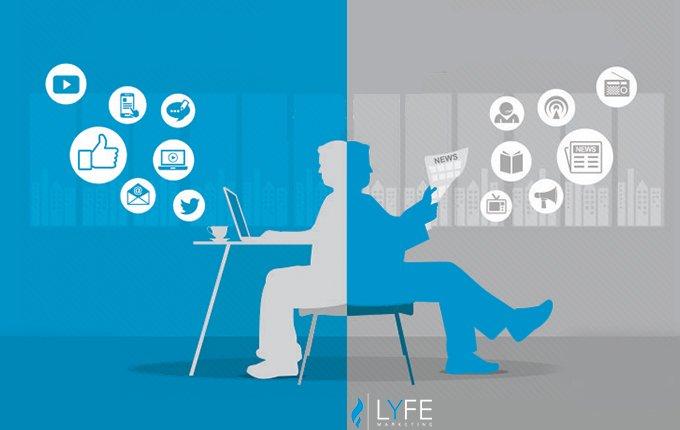
The internet makes it possible to have advertisements for a company’s product promoted directly to those same consumers through complex algorithms. There are also streaming platforms, social media advertisements, E-mail advertisements and subscriptions, and several other ways of promoting something to consumers on the internet. These changes in marketing strategies from what they might have been in the past are due to changes in consumer behaviour (Tiago and Verissimo, 2014). There are about 4 billion internet users online, meaning just over half the population is connected online. There are also roughly 5 billion people who have mobile devices and over half of these are smart phones. It is anticipated that $93 million will be spent on mobile advertising this year alone, which is 20 million more than will be spent on TV (Pinchbeck, 2019). The digital space also makes it possible to track the results of different advertisements, not only through sales numbers, but through interactions and reactions to them online. It is possible to monitor how many times people clicked on an advertisement, how many likes a particular add might have on social media or YouTube, comments people leave, how much traffic the company’s website has received since the release of a particular marketing campaign, etc. It provides a direct connection to consumers where they can provide their own feedback as well and in turn benefit the company further down the line.
The internet is also a place that provides accessibility to customers as more and more people are purchasing things online every year. Advertisements can drive traffic to the website and increase sales, as the items are but a click away from the consumer and they do not have to go out of their way to purchase anything. Marketing teams could also choose to provide online-only deals to customers that purchase from them rather than outlets or other stores selling their products, giving the business the money directly. This also provides the ability to promote products or services in different markets that the company would not have had access to previously, as well as provide smaller companies an opportunity to compete with larger ones (Chaffey and Chadwick, 2019). All of these new possibilities are becoming a larger and larger part of marketing efforts for businesses.

With regards to the future of marketing teams and executives in this digital economy, I believe we will continue to see a shift towards a more digital marketing environment. As time goes on, the generations coming into these positions have grown up taking instant digital information for granted (Morris 2009). In the same way that I spoke about consumer behaviours shifting above, these are the same consumers who will be taking up these positions having grown up in a digital age, and as such will continue to push a more digital approach to marketing. It is also unlikely that marketing roles will be replaced by machines or algorithms. Although algorithms and technology will not doubt be able to pinpoint the trends and make marketing roles easier, it will still be the marketing executives’ role to put the best marketing strategy in place for an organisation to succeed.
References
Chaffey, D., & Ellis-Chadwick, F. (2019). Digital Marketing (7th ed.). Montreuil: Pearson.
Morris, N. (2009). Understanding digital marketing: marketing strategies for engaging the digital generation. Choice Reviews Online, 46(10),
Pinchbeck, H. (2019). The Impact of New Technology on Marketing | #DMWF World Series. Retrieved 12 February 2020, from https://www.digitalmarketing-conference.com/the-impact-of-new-technology-on-marketing/
Frost, R., & Strauss, J. (2008). E-Marketing (5th ed.). New Jersey: Prentice Hall.
Tiago, M., & Veríssimo, J. (2014). Digital marketing and social media: Why bother? Business Horizons, 57(6), 703-708.
 Alberto's Headspace
It’s interesting to read your post about changed marketing in the digital economy! I do agree that technology will improve the marketing, but it cannot replace the marketing role. At present, digital marketing is about to enter the 5G era. With the upgrading of consumer behavior in the 5G era and the new wave of the Internet of Everything, what new challenges do you think the digital marketing industry will meet in the future?
LikeLike
Hi Albi, digital marketing is one of my favourite topics so I was very interested in reading this blog. I have a few thoughts about what you said.
1) The first thing to mention is how user data will be protected with the increasing adoption of digital marketing strategies. From my perspective I have seen how China has far fewer protection rules when compared to the EU, especially with the recent introduction of the GDPR rules in 2017 (EU Commission, 2017). It will be interesting to see how digital marketing changes in china and the EU.
2) The final point is regarding the types of digital marketing strategies. It would be interesting to see some statistics on what form of digital marketing is the most effective. Moreover, it would also be see what demographics of people prefer certain types of digital marketing.
Thank you for the article, I look forward to reading the next one!
LikeLike